

Within the domain of high-precision optical equipment, maintaining the integrity of the environment is essential for achieving peak performance. This is where vacuum windows play a vital role. Engineered to facilitate the monitoring and control of occurrences occurring inside a vacuum chamber, these specialized optical components are essential in a variety of technical and industrial applications. By supplying a unobstructed path for light and yet upholding the vacuum seal, vacuum viewports enable high-resolution imaging and accurate measurements that are important in fields such as physics, material science, and astronomy.
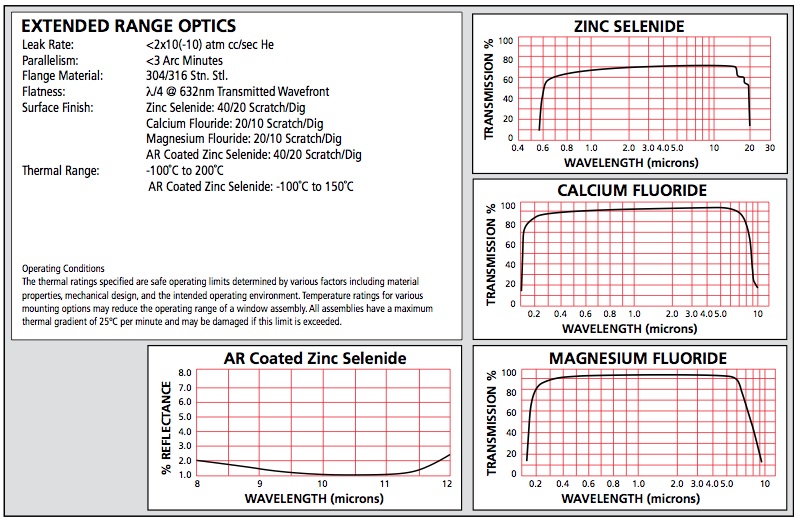
The applications of vacuum viewports expand past mere observation. They are indispensable to experiments that call for exceptionally controlled settings, helping to reduce atmospheric interference that can distort results. Whether in a particle accelerator, a semiconductor fabrication facility, or a high-powered laser system, these viewports function as critical interfaces connecting the environment outside the vacuum and the processes happening within it. Understanding the function and operation of vacuum viewports is essential for anyone engaged in accurate optical systems, as their contribution significantly affects the quality and trustworthiness of research results.
Purpose of Negative Pressure Windows
Vacuum viewports serve as critical components in high-precision light systems where maintaining a stable environment is key. Their chief function is to provide a transparent barrier that separates the vacuum within a chamber from the surrounding pressure outside. This role is important for applications where impurities such as dust and humidity can adversely affect optical performance and overall system reliability.
Engineered to tolerate significant pressure differentials, vacuum viewports are engineered from materials with outstanding optical clarity and strength. Common materials include specific glass and quartz, which offer reduced absorption and little scattering of light. This ensures that the passage of light through the viewport stays unobstructed, allowing for accurate optical measurements and clear imaging in systems such as astronomical devices, lasers, and semiconductor manufacturing tools.
In addition to their protective role, vacuum viewports are often equipped with specific anti-reflective coatings to enhance transmission efficiency. These coatings minimize losses that can occur when light interacts with the face of the viewport. By optimizing the optical performance of the viewport, these enhancements contribute to the overall performance and precision of the high-precision systems they are incorporated into.
Manufacturing Factors
The manufacturing of vacuum windows involves exact design and material selection to guarantee maximum performance in high-precision light-based systems. The materials used must have minimal thermal conductivity and high optical clarity, which is frequently achieved through the use of specialized glass or light polymers. These materials need to undergo rigorous testing for their light properties, guaranteeing minimal distortions and reflections that could impact system functioning.
Additionally, the fabrication process for vacuum windows must consider the particular surrounding conditions in which they will function. This includes ensuring stringent control over factors such as air differentials and temperature fluctuations. Proper sealing methods are critical to avoid air leakage and preserve a flawless vacuum environment, which can be achieved through techniques like welding or using premium adhesives designed for vacuum applications.
Quality control plays a crucial role in the manufacturing of vacuum windows. Each viewport must be evaluated for structural integrity and light quality before use. This often includes functional tests under test conditions to ensure that the viewports can withstand the requirements of their intended use. Producers seek to minimize defects and confirm that each viewport meets the standards required for high-accuracy operations, therefore enhancing the dependability of the optical systems they support.
Implementations in Optical Systems
Vacuum ports play a vital role in the operation of high-precision optical setups across diverse fields, including astronomy, laser technology, and materials science. In astronomical applications, these viewports enable telescopes to monitor celestial bodies without the impact of the atmosphere. By maintaining a vacuum environment, viewports eliminate dust and moisture, which enables sharper and more precise views. This aspect is essential for capturing detailed pictures and spectra, contributing to developments in our knowledge of the universe.
In the realm of lasers, vacuum viewports are utilized in systems such as cutting lasers and material processing. They provide an interface for lasers to engage with substances while keeping the vacuum state necessary for maximum performance. The absence of air allows for greater laser intensities and improved beam quality, resulting in processes more efficient and precise. As sectors increasingly utilize laser technology for manufacturing and research, the role of vacuum viewports in providing consistent results cannot be exaggerated.
Moreover, vacuum viewports are commonly utilized in various scientific studies, particularly in the area of particle physics. High-energy particle accelerators demand a vacuum environment to enable the collision of particles at incredibly high speeds. Viewports in these systems allow researchers to observe experiments and gather data without disturbing the vacuum, which is essential for the integrity of the results. The capacity to apply advanced optical methods in conjunction with vacuum viewports greatly improves the quality of experimental outcomes, leading to innovative breakthroughs in scientific research.